
Mortgage Loan Tips and Videos




If you’ve ever been told “you don’t qualify” for a home loan—even though you earn good money, have assets, or own rentals—you’re not alone. Traditional mortgage guidelines work well for “standard” borrowers… but they can be a poor fit for: Self-employed buyers Commission-based income Real estate investors Borrowers with complex tax returns People with strong cash flow but non-traditional documentation That’s where non-traditional mortgage financing (often called Non-QM) can help. What does “Non-QM” mean? Non-QM stands for Non-Qualified Mortgage—a loan that doesn’t fit within the CFPB’s “Qualified Mortgage” (QM) framework. QM is tied to the Ability-to-Repay rule, which requires lenders to make a reasonable, good-faith determination that a borrower can repay the loan. Non-QM loans still involve underwriting and documentation—but they may allow alternative ways to demonstrate income or repayment ability when your situation is more nuanced. Common non-traditional mortgage options (and who they’re for) 1) DSCR Loans (Investor Loans Based on Rental Income) If you’re a real estate investor, a DSCR loan may let you qualify based more on the property’s income than your personal W-2s. DSCR stands for Debt Service Coverage Ratio, which compares a property’s net operating income to its debt payments. Best for: buy-and-hold rental property investors who want the property’s cash flow to do the talking. 2) Bank Statement Loans (Great for Self-Employed Borrowers) For business owners and self-employed borrowers, traditional underwriting can be frustrating—especially when write-offs reduce taxable income. A bank statement loan uses your bank deposits over a set period (often 12–24 months) to help establish income instead of relying primarily on W-2s and pay stubs. Best for: self-employed buyers with strong deposits/cash flow and inconsistent “paper” income. 3) Asset-Based Qualification (Qualify Using Assets) Some programs allow qualification based on verified assets—useful for retirees, high-net-worth borrowers, or anyone with significant reserves but non-traditional income streams. (Exact rules vary by lender/program.) Best for: borrowers with strong assets who want flexibility in how repayment strength is documented. Pros and cons of non-traditional financing Potential benefits More flexible qualification for real-world income scenarios Can be a path forward for investors and self-employed borrowers Things to watch Pricing, down payment requirements, and documentation can differ from conventional loans (often higher rates/requirements depending on profile and product). Not every borrower is a fit—strategy matters. How to know if you should explore non-traditional options Non-traditional financing may be worth a look if you’re saying: “My tax returns don’t reflect my real cash flow.” “I’m buying rentals and want a smoother way to qualify.” “I have assets, but my income is complicated.” “I want a loan strategy built for my situation—not a one-size-fits-all form.” A strong loan advisor should help you compare routes and choose the best long-term plan—not just the fastest approval. Want to see what you qualify for without guessing? We can review your situation and map out the best path—traditional or non-traditional—based on your goals.

If you’ve ever applied for a mortgage (or even shopped rates) and then immediately started getting bombarded with calls, texts, and emails from lenders you’ve never heard of—there’s a reason. It’s usually caused by something called mortgage trigger leads. In plain English: when your credit is pulled for a mortgage, that inquiry can “trigger” your info to be sold and shared—leading to a flood of outreach. What is a “trigger lead”? A trigger lead is created after a mortgage credit inquiry happens. Credit bureaus can legally generate a lead based on that inquiry and provide it to other lenders or lead buyers, who then contact you to compete for your business. That’s why it can feel like your information “leaked” the moment you applied. In many cases, it didn’t leak—this is simply how the system has worked. Why do the calls start so fast? Because trigger lead activity can happen shortly after the credit inquiry—sometimes within a day. So from your perspective: You apply for a mortgage Your lender pulls credit Your phone lights up nonstop Are trigger leads legal? Historically, they’ve been allowed under federal credit reporting rules—but the practice has faced major backlash because it creates confusion, trust issues, and harassment for borrowers. Important update: changes took effect in 2026 A federal law—the Homebuyers Privacy Protection Act (H.R. 2808)—was signed in September 2025 and took effect March 4, 2026, significantly restricting mortgage trigger leads unless certain conditions are met (like express consumer authorization or specific existing relationships). (If you applied before that date, you may have experienced the “classic” trigger lead flood more intensely.) How to reduce unwanted calls, texts, and emails Even with new restrictions now in effect, you can still take steps to reduce annoying outreach. 1) Opt out of prescreened credit/insurance offers You can opt out through the official industry site OptOutPrescreen.com (temporary or permanent options). 2) Add your number to the National Do Not Call Registry Register and report unwanted telemarketing calls at DoNotCall.gov. 3) Don’t confirm personal info to random callers If you answer, avoid confirming details like DOB, employer, or SSN. If it’s legitimate, you can call back using a verified company number. 4) Work with one trusted lender (and ask about privacy) A good lender will explain what trigger leads are and how to minimize disruptions—and they’ll never pressure you through scare tactics. Quick FAQ Why are these lenders calling me? Because your mortgage inquiry signals you’re actively shopping—and competitors want your business. Is my current lender selling my information? Usually, no. The trigger is often the credit inquiry itself and how that data is handled in the credit ecosystem. Will the new 2026 rules stop everything? They significantly restrict trigger lead use, but you may still receive marketing from other sources and you can still benefit from opt-out and Do Not Call protections. If you’re planning to buy a home or refinance and want a straight, no-pressure mortgage conversation (without the noise), we’re here to help. Ready to talk options? ✅ Request a rate quote ✅ Ask questions about credit pulls and timing ✅ Get a clear plan—before you apply














Escrow Accounts - what are they and how do they work? Listen as Eric Jones, NMLS# 428259 breaks down the basics. 🏡

Do you know your debt-to-income ratio (DTI)? Listen in as Keith Cullens, NMLS #469463 briefly explains DTI and how it may impact what loan programs you qualify for.

Here at Kentuckiana Mortgage Group Inc. we do everything we can to make the process as easy and quick as possible, but YOU as the borrower have the power to control how fast the loan process moves as well.

Have you ever wondered what is included in your mortgage payment? Listen in as Adam DeSpain, NMLS# 1803932 runs through the components that make up your monthly payment and explains why certain items may not be included.

The process of buying a home looks a little different these days but we have adapted to make things as smooth as possible. Brad Sea NMLS# 425420 shares some of the ways we are embracing technology to help our clients.

Behind the scenes of every closed mortgage is a good processor! Listen as Haley Roth, NMLS# 1830358 and Taylor Cartuyvelles, NMLS# 1545905 explain one of the most important parts of the loan process - Conditional Approval.

Home inspections and home appraisals are commonly confused, but they are two very different things! Listen in as Adam DeSpain, NMLS# 1803932 explains the differences.

Kentuckiana Mortgage Group Inc. is committed to providing a website that is accessible to all individuals and compliant with accessibility guidelines. We are continually making improvements to meet these guidelines, and our website has been designed with accessibility in mind.
Indiana property taxes can be confusing! Listen as Brad Sea, NMLS# 425420 runs through the basics of property taxes and tax proration.
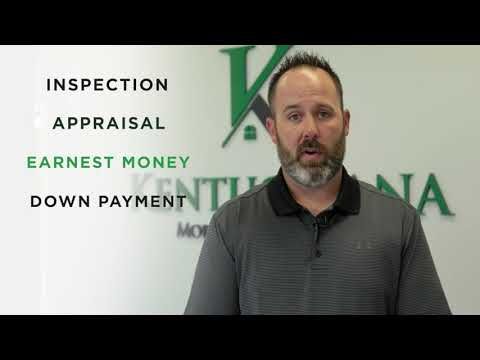
Saving up for a down payment is important, but there could be other costs when buying a home! Adam DeSpain #NMLS 1803932 explains 4 costs that you should consider as you prepare to buy your new home.

Saturday, September 14th marked the 205th anniversary of the ‘Star Spangled Banner’. What better way to celebrate the creation of our national anthem than providing valuable information to those who have served our country! Listen to find out more from Brad Sea NMLS# 425420

With every new purchase loan, you need to set up new homeowners insurance. Eric Jones NMLS# 428259 talks with Rob Holtzmann about what he does at Hyland Insurance, how he can help home buyers, and common misconceptions associated with homeowners insurance.

What are property taxes and homeowners insurance? Adam DeSpain NMLS# 1803932 dives into the specifics of both!

Keith Cullens NMLS# 469463 discusses some important details you should know about condominiums! If you have any questions be sure to reach out to us at 812-725-0017.

In addition to your credit score, your debt-to-income ratio (DTI) is an important piece of your overall financial health. More specifically, DTI is a personal finance measure that compares your debt payments to your gross monthly income. When figuring out how much you may qualify to borrow, brokers factor in the total percentage of income that is paid toward debt every month.

No Description

NO Description

Keith Cullens NMLS# 469463 goes over some key factors of a USDA loan. Reach out to us at , 812-725-0017 to see if you may be eligible!

Our Mortgage Loan Originators will explain everything you need to know, but understanding some basic mortgage concepts may help you feel more comfortable before you begin the process of obtaining a mortgage.

Eric Jones NMLS# 428259 lists just a few of the careers fields that may qualify for a Down Payment Assistance program!

The team enjoyed the opportunity to get out on the golf course and support the Floyd Memorial Foundation at their Annual Golf Scramble!

The team had a blast participating in the 2019 Louisville Corporate Games!

Whether you are a seasoned home buyer or looking for your very first home, these tips & tricks will help you through the process!

Brad Sea NMLS# 425420 gives us some great information about different down payment options (even including 0% down)!
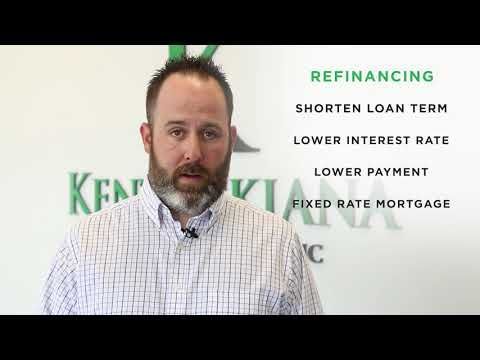
Adam DeSpain NMLS# 1803932 gives us 5 reasons why you should be considering refinancing your current mortgage.

This is one of the most important steps to buying a home. Getting pre-qualified will give insight as to what price range you qualify for, allow you to talk monthly payments with a broker, and keep you competitive with other potential buyers.

Eric Jones NMLS# 428259 tells us the difference between a mortgage broker and a direct lender.

Brad Sea NMLS# 425420 tells us some things to know when looking to finance a manufactured home!

Keith Cullens NMLS# 469463 tells us the difference between a pre-qualification and a pre-approval and when they are most likely used!

We would like to thank the City of New Albany, the Mayor's Office, Extol Magazine, Develop New Albany A Main Street Organization and everyone that attended or sent well wishes to us the day of our official Ribbon Cutting Ceremony. It meant so much to us and we look forward to these new beginnings!

The Kentuckiana Mortgage Group team had a wonderful night at the Schuler Bauer Awards! We had the honor of giving away the 'Rookie of the Year' Award for both Indiana and Kentucky. Thank you to Schuler Bauer Real Estate Services for hosting such a fun night.
